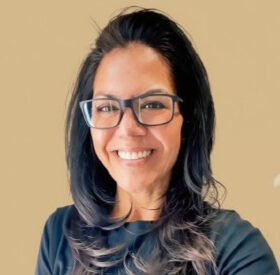
Meet Shayne:
I am Shayne Pungowiyi from Kotzebue, Alaska. I am the daughter of Gladys Pungowiyi and the late Caleb Pungowiyi. As a mother of four and grandmother of four, I understand the importance of protecting the future for the generations who will follow us. I am currently pursuing an Associate of Applied Science in Tribal Governance at the University of Alaska Fairbanks, with the goal of strengthening Alaska Native communities through tribal leadership, advocacy, education, and public service.
I was drawn to the Caleb Scholars Program because it reflects the values my father dedicated his life to: protecting the Arctic, uplifting Indigenous voices, and ensuring future generations have a meaningful role in caring for our homelands. Inuit-led conservation advocacy means Indigenous people leading decisions about the lands, waters, and wildlife we have depended on for countless generations. Through my studies, my involvement in my community, and my commitment to lifelong learning, I strive to honor those values. My father’s legacy continues to inspire me to serve our people, protect our culture, and help preserve the Arctic for future generations.
What does Inuit-led conservation advocacy mean to you? How will your education and degree program prepare you to contribute to this work?
Inuit-led conservation advocacy means that our people are the ones leading decisions about our land, water, and resources, guided by our traditional knowledge, values, and lived experience. Growing up in Kotzebue and being connected to communities across the Northwest Arctic, I have seen firsthand how closely our way of life depends on a healthy environment. Conservation, to me, is not just about protecting the land; it is about protecting our culture, subsistence lifestyle, and future generations. It also means ensuring that outside policies and decisions respect Inuit voices and include us at the table as leaders, not just stakeholders.
Through my education in Tribal Governance and my goal of earning a bachelor’s degree in political science, I am preparing myself to contribute to this work by understanding policy, law, and government systems that impact our region. My role with NANA Regional Corporation has already given me experience working with leadership and government partners on issues affecting our communities, including infrastructure, emergency response, and long-term sustainability.
With this foundation, I plan to advocate for policies and resources that support our communities while protecting our environment and cultural practices. I want to help ensure that Inuit voices are heard in decision-making spaces and that solutions are developed by and for our people. My education will give me the tools to navigate these systems effectively, so I can be a strong advocate for our region now and into the future.