Meet Sara:
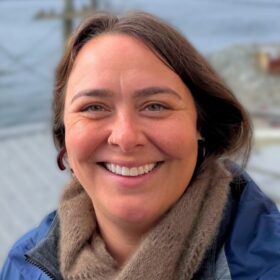
My name is Sara Leckband. My Inupiaq name is Chaqalinitaq; it means butterfly. I was one of the last in my family to receive an Inupiaq name from my great-grandmother Martha Walker-Apok of White Mountain. My maternal grandparents are the late Marge Apok and Virgil Warnke of Nome. My parents are Oupa Warnke and George Leckband. I currently reside in Anchorage with my two children.
My professional work and graduate studies are rooted in service to my community. I am driven by a belief that strong Indigenous institutions create opportunities for future generations. My career has focused on building programs, improving systems, and strengthening connections between our Alaska Native organizations and the people they serve. I was drawn to the Caleb Scholars Program because I value Indigenous leadership grounded in our knowledge, our communities, and our responsibility to one another. I hope to continue learning alongside other Indigenous leaders and contribute to work that protects our homelands while strengthening the long-term health and resilience of our communities.
What does Inuit-led conservation advocacy mean to you? How will your education and degree program prepare you to contribute to this work?
Inuit-led conservation advocacy means Inuit communities retain authority over decisions affecting our lands, waters, resources, and future generations. Conservation in the Arctic cannot be separated from Indigenous sovereignty, subsistence, cultural continuity, and community wellbeing. Our communities have stewarded these lands for thousands of years through lived knowledge, observation, reciprocity, and responsibility to place. Inuit-led advocacy ensures those perspectives guide policy, development, and environmental decision-making.
My education in Rural Development at the University of Alaska Fairbanks has prepared me to approach these issues through both community-centered frameworks. My studies focus on land use, governance, and sustainable development in rural Alaska, with an emphasis on how systems and policies affect long-term community wellbeing. Professionally, my work within the Alaska Native corporation system has strengthened my understanding of how Indigenous institutions balance stewardship, community development, and advocacy while remaining accountable to the communities they serve.
Through both my academic and professional experiences, I have seen the importance of ensuring Inuit voices remain central in conversations about land use, resource management, and the future of Arctic communities. I am especially interested in approaches that support sustainable community development while protecting cultural continuity, subsistence practices, and long-standing relationships to the land. I hope to continue working in roles that support Indigenous self-determination, strengthen sustainable Arctic communities, and ensure Inuit voices remain central in decisions affecting our homelands.