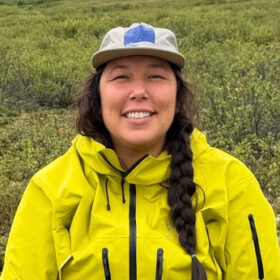
Meet Kimberly:
I was born and raised in Anchorage and now call Nome home. I am Inupiaq from King Island (Ukivok) on my father’s side and Sugpiaq on my mother’s side. I serve as the Wellness Director at Kawerak while pursuing an Executive MBA in Strategic Leadership at Alaska Pacific University. I hope to continue serving the Norton Sound Region and grow into leadership roles where I can help shape decisions that impact our communities. I was drawn to the Caleb Scholars Program for the opportunity to learn from its alumni and connect with Indigenous leaders who are navigating two worlds while remaining grounded in who they are. Caleb Pungowiyi’s legacy resonates with me because he reminds me of leaders in my own life who not only advocate for our traditional ways of being, but live them. To me, Inuit-led conservation means ensuring Indigenous knowledge and community voices guide decisions affecting our lands, waters, and communities.
What does Inuit-led conservation advocacy mean to you? How will your education and degree program prepare you to contribute to this work?
To me, Inuit-led conservation advocacy means ensuring that Inuit voices are leading the decisions that affect our lands, waters, and communities. Our relatives have cared for these places for generations through traditional knowledge, respect for the environment, and a way of life rooted in sustainability. Conservation is not a new concept to us; it is something we have practiced for generations. Inuit-led advocacy means protecting those values while ensuring our communities have a meaningful voice in the decisions that shape our future.
As Wellness Program Director at Kawerak, I have come to see that conservation and wellness are deeply connected. The health of our people depends on the health of our lands, our culture, and our ability to continue traditional practices. Whether supporting youth through cultural camps, partnering with tribes, or working alongside regional organizations, I have seen how strengthening cultural identity also strengthens community wellness.
As I have grown in my career, I have realized that leadership is where I can make an impact in our communities. Because of that, I have changed my degree path from the general Master of Business Administration to the Executive MBA in Strategic Leadership. This program is preparing me to navigate complex organizations, build strong partnerships, manage resources responsibly, and lead with both cultural values and strategic thinking. My goal is to use my education and lived experience to ensure our communities are not only included in conversations about conservation, but are leading them for future generations.